How to Maintain Your Tankless Water Heater
Tankless water heater maintenance in Cincinnati comes down to one thing: annual descaling. Here's the flush schedule, cost, and DIY steps that actually work.
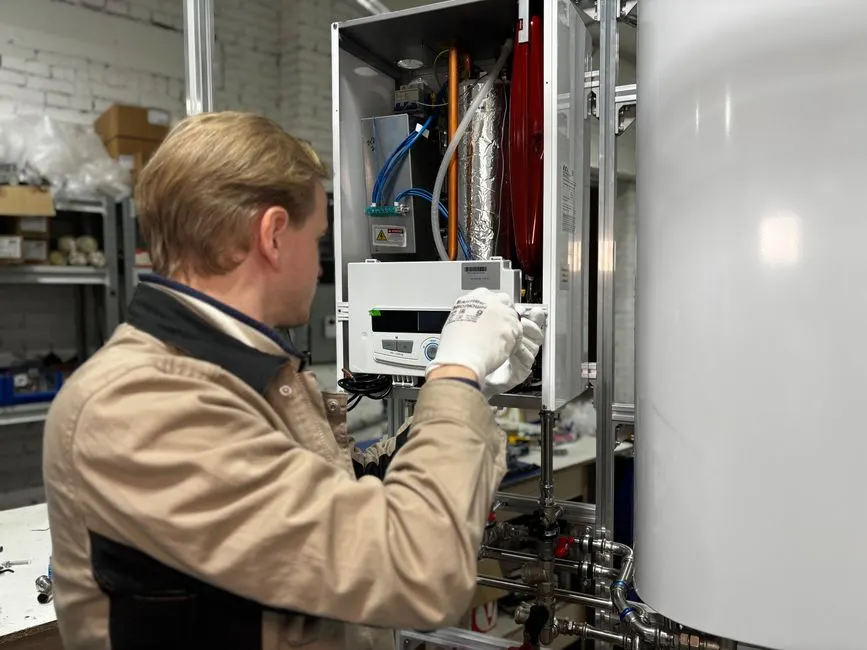
Maintaining a tankless water heater in Cincinnati means flushing the heat exchanger with white vinegar once a year to dissolve the calcium carbonate that our hard Ohio River water leaves behind. Skip that flush and you will lose hot water pressure, trigger error codes, and eventually cook the unit years before its time. Everything below is the same routine our technicians run on tankless systems from Hyde Park to Delhi, and you can do most of it yourself with a bucket, two hoses, and about an hour.
Tankless water heater maintenance Cincinnati OH homeowners actually need is not complicated. It is a schedule. We will walk through how often to flush, what the DIY version looks like, which parts fail first in our climate, and the point where calling a licensed plumber saves you money instead of costing it.
Why Tankless Water Heaters Need Maintenance in Cincinnati
Cincinnati tap water runs hard. Greater Cincinnati Water Works pulls from the Ohio River and treats it, but the mineral content that reaches your fixtures still averages roughly 7 to 9 grains per gallon of hardness, and that is enough to scale a heat exchanger. Tankless water heater maintenance is the process of removing that scale before it hardens into an insulating layer inside the copper.
Here is what scale does. A tankless unit pushes water through narrow passages and heats it with a gas burner or electric elements in seconds. When calcium deposits coat those passages, the water cannot absorb heat fast enough. You notice it as lukewarm showers, a unit that runs longer for the same hot water, and eventually a shutdown code because the outlet temperature sensor never hits its target.
Scale also shortens the life of the unit. A well-maintained tankless heater lasts 20 years or more. One that never gets flushed in a hard-water city often fails between year 8 and year 12. That is a $1,800 to $3,200 replacement you can push back a decade with a $150 to $300 annual service.
There is a second reason specific to our region: winter. When the Ohio River valley drops into the teens in January, incoming water temperature falls to around 40 to 45 degrees. Your unit has to work much harder to raise that to 120 degrees, which is exactly when a scaled heat exchanger gives out. Late fall is the smartest time to schedule service, and that is where we are right now.
If your tankless unit is already struggling, or you are weighing repair against replacement, our team handles tankless water heater service Cincinnati homeowners call us for every week. We diagnose the code, flush the exchanger, and tell you straight whether the unit has years left or is on its way out.
How Often Should You Flush a Tankless Water Heater in Cincinnati?
Flush your tankless water heater every 12 months in Cincinnati, and every 6 to 8 months if you are on well water or have a whole-house softener that is overdue for its own service. Manufacturers print the same guidance in the manual, but the number that matters is water hardness, and ours is high enough that annual is the floor, not the ceiling.
Use these triggers to adjust your schedule:
- Well water in Butler, Warren, or Clermont County: every 6 to 8 months. Iron and manganese build up faster than calcium alone.
- City water inside I-275: every 12 months.
- Softened water with a working softener: every 12 to 18 months, but still check the inlet filter annually.
- Rental property or vacation home: once a year regardless of use. Sitting water and infrequent firing both cause problems.
If you have never flushed the unit and it is more than three years old, do not assume it is ruined. We have descaled units in Oakley and Anderson Township that were five years behind and brought them back to full temperature rise. What we cannot undo is a cracked heat exchanger, which is why the flush matters before the failure, not after.
DIY Tankless Water Heater Maintenance in Cincinnati: The Annual Flush
You can descale a tankless water heater yourself in about 60 to 90 minutes if you are comfortable with a wrench and a bucket. Here is the sequence we use.
- Shut off the gas or power. Gas units: turn the gas valve to off. Electric units: kill the breaker at the panel. Do not skip this.
- Close the three water valves. Cold inlet, hot outlet, and the isolation valves if your install has them. Most modern Cincinnati installs do.
- Connect the pump hoses. One hose from the cold service port to a submersible pump, one from the hot service port back into the bucket.
- Fill the bucket with 2 to 3 gallons of white vinegar. Plain 5 percent vinegar, not cleaning vinegar. Vinegar is the descaling agent; you do not need a specialty chemical.
- Run the pump for 45 to 60 minutes. You will see the vinegar turn cloudy and gritty. That is the scale coming off.
- Flush with clean water. Swap the bucket for fresh water and run the pump another 5 to 10 minutes to rinse the exchanger.
- Clean the inlet filter. Pull the small screen on the cold water inlet, rinse it, and put it back. A clogged filter mimics a scaled exchanger.
- Restore valves, power, and gas. Open the valves slowly, then fire the unit and check for leaks at every connection.
If you would rather not handle the pump and hoses, or your unit is mounted high on a garage wall, our water heater maintenance Cincinnati OH service covers the full flush, the inlet filter, the flame rod, and a combustion check in one visit.
Monthly and Quarterly Upkeep Most Homeowners Skip
The annual flush gets all the attention, but the small stuff between flushes is what keeps the unit running quietly. None of it takes more than five minutes.
Once a month: look at the exterior. Check the vent termination outside for bird nests, leaves, or frost blockages. A blocked intake on a cold morning is the number one cause of no-hot-water calls we get in December and January. Wipe down the front panel and make sure nothing is stacked against the unit.
Every three months: test the temperature setting. Most Cincinnati homes run 120 degrees, which is the sweet spot between scald safety and enough hot water for a family of four. If you have to push it to 130 or 140 to get a decent shower, the exchanger is scaling and the flush is overdue.
Twice a year: check the condensate trap on high-efficiency condensing units. These drain a small amount of acidic water, and the trap can clog with debris. A clogged trap shuts the unit down with an error code that looks like a flame failure.
Every fall: walk the vent pipe and confirm the joints are sealed. Cincinnati winters swing hard, and a loose vent joint can pull cold air into the combustion chamber and cause intermittent ignition failures.
What Tankless Water Heater Error Codes Are Telling You
Error codes are the unit telling you what it cannot do, and most of them point back to maintenance. Here are the ones we see most across Cincinnati.
Code 11 or 12 (no ignition / flame failure): usually a dirty flame rod, a clogged inlet filter, or a gas supply issue. Clean the flame rod with fine steel wool and check the filter before you assume the gas valve is bad.
Code 16 or 32 (outlet temperature too high): almost always scale. The exchanger cannot transfer heat fast enough, so the outlet sensor trips. Flush it.
Code 52 or 59 (modulating gas valve or fan): a blocked vent or a failing fan motor. Check the exterior termination first.
Code 79 or 94 (freeze protection or internal blockage): common in unheated garages and crawl spaces during a Cincinnati cold snap. If the unit froze, do not fire it until it thaws and you have checked for cracked fittings.
Write down the code before you reset the unit. Resetting clears the memory on many models, and that code is the fastest diagnostic tool we have when we arrive.
If the code keeps coming back after a flush, the problem is mechanical, not mineral. That is a job for a licensed plumber, and it is worth knowing the difference before you spend a weekend chasing it. Homeowners across the region who want a second opinion on a failing unit often start by comparing tankless water heater installation Cincinnati OH costs against another repair, because a 12-year-old unit with two failed components rarely makes financial sense to fix.
What to Watch Out For: Common Mistakes
The mistakes we see on tankless units in Cincinnati follow a pattern. Avoid these and your unit will outlast its warranty.
- Using the wrong descaling solution. Vinegar works. Harsh acids can pit the copper exchanger if you leave them in too long or skip the rinse.
- Flushing without isolating the unit. If you do not close the service valves, you push vinegar into your home's hot water lines. Always confirm the valves are closed before the pump starts.
- Ignoring the inlet filter. A $6 screen causes more no-hot-water calls than any other single part. Rinse it every flush.
- Running the flush for 15 minutes and calling it done. Scale needs contact time. Forty-five minutes minimum, an hour if the unit has never been serviced.
- Never checking the vent. A nest or a sheet of ice on the termination will shut the unit down in the middle of a January morning.
- Setting the temperature to 140 to compensate for low output. That masks the scale problem, raises your gas bill, and creates a scald risk for kids and older adults.
One more: do not skip the flush because the unit is under warranty. Manufacturers require documented maintenance, and a heat exchanger claim with no service history is a claim that gets denied.
When to Call a Professional
Call a professional when the unit throws a code after a fresh flush, when you smell gas, when you see water pooling under the cabinet, or when the unit is mounted somewhere you cannot safely reach with a bucket and pump. Those are the four situations where DIY turns into a bigger repair.
We also get called for the annual service itself, and that is a perfectly good reason. Our technicians carry the pump, the hoses, and the replacement parts on the truck, so a standard flush and inspection is a single visit rather than a trip to the hardware store and an afternoon on a ladder. We check the flame rod, the inlet filter, the vent termination, the gas pressure, and the temperature rise, then leave you with a written record of the service for your warranty file.
If you are not sure whether your unit needs a flush or a repair, our team can tell you in one visit. We work on every major brand, and we will give you a straight answer on whether to service it or replace it.
Frequently Asked Questions
How do I maintain my tankless water heater in Cincinnati OH?
Flush the heat exchanger with white vinegar once a year, rinse the inlet filter at the same time, and check the exterior vent monthly. Set the temperature to 120 degrees and leave it there. If you are on well water, cut the flush interval to every 6 to 8 months.
How often should I flush my tankless water heater in Cincinnati Ohio?
Every 12 months on city water, every 6 to 8 months on well water. Cincinnati water averages 7 to 9 grains per gallon of hardness, which is high enough that annual is the minimum, not a suggestion. Units that go three or more years without a flush usually need repair, not just service.
Do I need a plumber to maintain my tankless water heater in Cincinnati?
No, the annual flush is a reasonable DIY job if you can reach the service valves. You need a plumber when the unit throws a code after flushing, when you smell gas, when water is leaking from the cabinet, or when the unit is mounted too high to service safely.
What happens if I don't maintain my tankless water heater in Cincinnati?
Scale builds inside the heat exchanger, hot water output drops, error codes start appearing, and the unit fails years early. A neglected tankless heater in our water typically lasts 8 to 12 years instead of 20. You also risk a denied warranty claim, since manufacturers require documented maintenance.
How much does tankless water heater maintenance cost in Cincinnati?
Typical 2026 pricing for a professional flush and inspection in the Cincinnati area runs $150 to $300, depending on the unit and access. DIY supplies cost about $30 to $50 for vinegar, hoses, and a submersible pump if you do not already own one.
Get Help with Plumbing in Cincinnati
Whether you want your tankless unit flushed before winter or you are chasing an error code that will not clear, we can take care of it. Call Emergency Plumber Cincinnati Pros at 513-827-8348 and we will get your hot water back to where it should be.